MC-Anchor solid
Press release

MC launches universal anchor bonding system

MC-AnchorSolid is the new, universal, integrated system with which a solid, positive bond can be made reliably and easily between the rebar or threaded rods and any crack-free concrete base.

MC launches universal anchor bonding system

16 Mar 2017

There are many construction jobs that involve the fixing of brackets, railings, shelving, canopies, awnings, scaffolding and similar to new and old concrete components. As a rule, rebar or threaded rods are used as bonded mechanical anchors. Now, with MC-AnchorSolid, MC-Bauchemie has developed a new, universal, integrated system with which a solid, positive bond can be made reliably and easily between the rebar or threaded rods and any crack-free concrete base. MC-AnchorSolid is quick and easy to use in a wide range of jobs, exhibits very good application properties and helps to save both time and money.
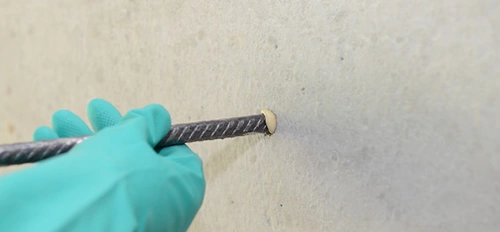
MC-AnchorSolid is quick and easy to use in a wide range of jobs, exhibits very good application properties and helps to save both time and money. <br>© MC-Bauchemie 2026

MC-AnchorSolid is quick and easy to use in a wide range of jobs, exhibits very good application properties and helps to save both time and money. MC-Bauchemie 2026

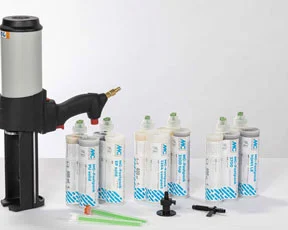
The MC-AnchorSolid kit comprises a new, highly reactive epoxy resin-based anchor adhesive, MC-AnchorSolid E820, the pneumatically powered delivery unit, MC-Fastpack Power Tool, and standard commercial threaded rods (M8 to M20) or concrete rebar steel (Ø8 to Ø20). The threaded rods or rebar are simply inserted into drilled holes filled with MC-AnchorSolid E820 which then sets, providing a solid bond between the steel component and the concrete.
MC-AnchorSolid is approved in accordance with European Technical Assessment ETA-15/0506 as a bonded anchor for static and quasi-permanent loads attached to crack-free concrete of the grades C20/25 to C50/60. It can be used for both dry and permanently damp interior and exterior substrates. In the case of cracked concrete components, the use of MC-AnchorSolid is also permitted provided that the cracks are rigidly repaired beforehand with the injection resin MC-Fastpack 1264 compact.

Multifunctional, easy to prepare and very quick-curing

MC-AnchorSolid E820 is an easy-to-use two-component adhesive that can be applied at temperatures between + 2°C and +40°C. The anchor adhesive exhibits very fast strength development at low consumption ratios, thus ensuring early initial loadability combined with impressively high ultimate compressive and tensile strength values. And as this new adhesive from MC is thixotropic with high stability values, it is also ideally suited to work on vertical and overhead surfaces.

Further extras: Kit case and design software

MC offers all the components necessary for application of the MC-AnchorSolid system in one kit case – from drill hole templates, drill hole brushes and fixing wedges to a pneumatic jet nozzle and a drill hole thermometer. MC has also developed a design software package for use with the bonded anchor system, enabling structural engineers and installation firms to quickly and reliably plan and cost related projects.
Related Products

pageImpression = pageImpression + 1; }); barba.init({ preventRunning: true, timeout: 5000, /* for debuggin usi this parameters debug: false, logLevel: 'debug', */ /*sync: true,*/ // define a custom function that will prevent Barba // from working on links that contains a `prevent` CSS class prevent: ({ el, event, href }) => { if (!el) { return false; } if (el.href && el.href.includes('landingpages')) { return true; } if (el.classList && el.classList.contains('prevent')) { return true; } return false; }, preventScroll: true, scroll: false, views: [], transitions: [ { name: 'header-transition', sync: false, from: { custom: ({ trigger }) => { if (trigger.classList && trigger.classList.contains('headerFlip')) { transistionImage = trigger.getElementsByClassName("transitionImage")[0]; if (typeof transistionImage == "undefined") { return false; } transisitionEffect = getRandomInt(1); return true; } return false; } }, async leave(data) { if (transistionImage === null) return; // can be null, return if null to not throw an error if ( transisitionEffect == 0) { const done = this.async(); let element = transistionImage; let state = Flip.getState(element); let headerImage = document.getElementById('headerImage'); headerImage.removeChild(headerImage.getElementsByTagName('img')[0]); let headerContent = document.querySelector('.headerContent'); gsap.to(headerContent, { opacity: 0, }); let content = document.querySelector('.content'); gsap.to(content, { opacity: 0, }); headerImage.appendChild(element); scroll(0,0); Flip.from(state, {duration:0.9, ease: "power1.inOut", scale: true, absolute:true,}); await delay(900); // Der await Operator wird genutzt, um auf einen Promise zu warten. Er kann nur in einer async Funktion benutzt werden. done(); } }, enter(data) { window.scrollTop = '0'; let content = data.next.container.querySelector('.content'); gsap.from(content, { opacity: 0, }); let headerContent = data.next.container.querySelector('.headerContent'); gsap.from(headerContent, { opacity: 0, delay: 0.5, }); }, after(data) { } }, { name: 'microsites_sliding_scroll', sync: true, from: { custom: (data) => { const { trigger, current, next } = data; function getParent(pathname) { const parts = pathname.split('/').filter(part => part !== '') return parts.length > 1 ? parts[parts.length - 2] : parts[0] || null } if (trigger === 'popstate' || trigger === 'back' || trigger === 'forward') { return false; } if(trigger.classList.contains('microsites_sliding_scroll') || trigger.classList.contains('sliding_scroll')){ return true; } if(current.namespace == 'template_138' && next.namespace == 'template_138') { return getParent(current.url.path) === getParent(next.url.path) } return false; } }, to: { namespace: [ 'template_120', 'template_138', ] },async leave({ current, next, trigger }) { const debug = window.debug; if (debug) console.log('Debug mode enabled'); const done = this.async(); const menuindexCurrent = +current.container.querySelector('[data-menuindex]').dataset.menuindex; const menuindexNext = +next.container.querySelector('[data-menuindex]').dataset.menuindex; const nextContent = next.container.querySelector('.content'); const currentContent = current.container.querySelector('.content'); let xPerc = menuindexCurrent < menuindexNext ? 100 : -100; const navbarHeight = document.querySelector('.navbar').offsetHeight; const pageHeight = document.querySelector('.header').offsetHeight; const nextContentHeight = nextContent.offsetHeight; const totalHeight = nextContentHeight + navbarHeight + pageHeight; document.body.style.minHeight = `${totalHeight}px`; const targetScrollY = trigger.classList.contains('microsites_sliding_scroll') ? pageHeight - navbarHeight : pageHeight + navbarHeight; const top = trigger.classList.contains('microsites_sliding_scroll') ? '0px' : '116px'; gsap.set(next.container, { xPercent: xPerc, position: 'absolute', top: top, left: 0, display: 'block' }); const tl = gsap.timeline({ onComplete: () => { gsap.set(current.container, { display: "none" }); gsap.set(next.container, { clearProps: 'position,top,left,xPercent' }); gsap.set(nextContent, { clearProps: 'xPercent' }); document.body.style.minHeight = ''; done(); } }); tl.to(currentContent, { xPercent: -xPerc, duration: debug ? 5 : 0.5, ease: "power1.inOut", }, 0); tl.to(nextContent, { xPercent: -xPerc, duration: debug ? 5 : 0.5, ease: "power1.inOut" }, 0); tl.to(window, { scrollTo: { y: targetScrollY }, duration: debug ? 5 : 0.5, ease: "power1.inOut" }, 0); }, enter({ next }) { gsap.from(next.container, { opacity: 0, }); } }, { name: 'microsites_sliding', sync: true, from: { custom: ({ trigger }) => { if (trigger === 'popstate' || trigger === 'back' || trigger === 'forward') { return false; } if(trigger.classList.contains('microsites_sliding')){ return true; } return false; } }, to: { namespace: [ 'template_120', ] }, async leave({current, next}) { const done = this.async(); const tl = gsap.timeline({onComplete: ()=>{ gsap.set(next.container, {clearProps: 'all'}) gsap.set(next.container.querySelector('.content'), {clearProps: 'all'}) }}) const currentContent = current.container.querySelector('.content') const nextContent = next.container.querySelector('.content') const currentH1 = document.querySelector('.currentPagetitle') const currentIntrotext = document.querySelector('.currentIntrotext') const nextH1 = next.container.querySelector('.pageTitle') const nextIntrotext = next.container.querySelector('.introtext') gsap.set(next.container, { xPercent: 100, position: 'absolute', top: 0, left: 0 }) tl.to(currentContent, {xPercent: -100, opacity: 0, duration: 1, ease: "power1.inOut", onComplete: () => { gsap.set(current.container, { display: "none" }); }}, 0) .to([currentH1, currentIntrotext], { opacity: 0, duration: 0.5, ease: "power1.inOut", onComplete: () => { currentH1.innerText = nextH1.innerText; currentIntrotext.innerText = nextIntrotext.innerText; }}, 0) .to([currentH1, currentIntrotext], { opacity: 1, duration: 0.5, ease: "power1.inOut" }, 0.5) .to(nextContent, {xPercent: -100, duration: 1, ease: "power1.inOut"}, 0) await delay(1000); done(); }, enter({next}){ gsap.from(next.container, { opacity: 0, }); } }, { name: 'default', sync: false, async leave(data) { const done = this.async(); gsap.to(data.current.container, { opacity: 0, duration: 0.5, }); await delay(500); // Der await Operator wird genutzt, um auf einen Promise zu warten. Er kann nur in einer async Funktion benutzt werden. scroll(0,0); done(); }, enter(data) { window.scrollTop = '0'; gsap.from(data.next.container, { opacity: 0, duration: 0.5, }); }, after(data) { // START: Ankur - 15062023 - For Scroll Position History if(scrollHistory[data.next.url.href]) { let scroll = scrollHistory[data.next.url.href]; window.scrollTo({top: scroll.y, behavior: 'instant'}); } // END: Ankur } }, { name: 'self', enter() { }, } ] }); });